A fragrant first glass
For an aromatic style, a small wine glass can be a useful starting point. Begin with a modest pour and time to notice it.
Read the serving notes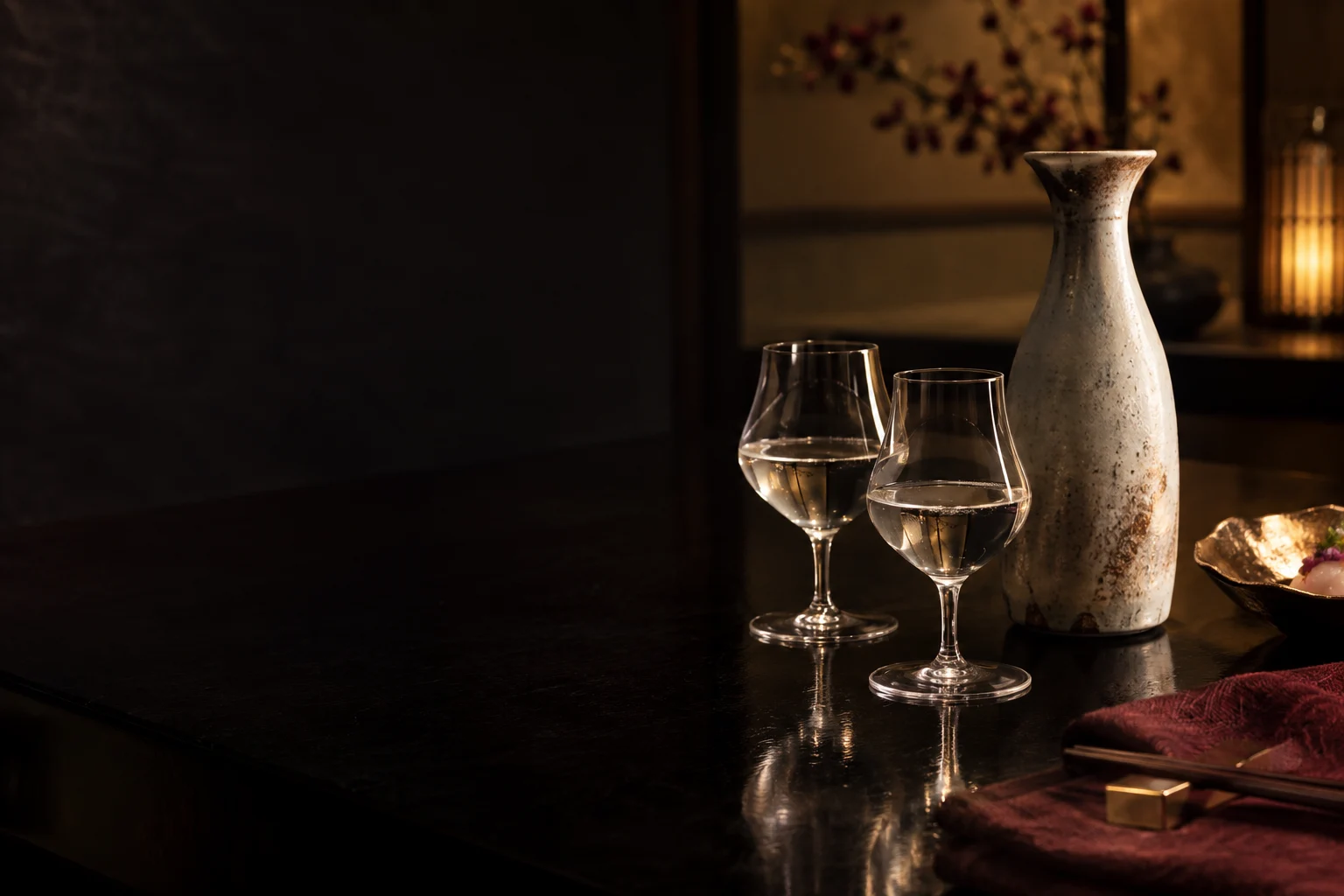
THE EVENING EDIT · JAPANESE SAKE
Bring a different story to the table. Discover Japanese sake through the glass, the menu, and the moment—not only the label.
Original editorial illustration · not a photograph of a listed product or venue
THREE WAYS INTO THE EVENING
Three editorial starting points, not fixed pairing rules. Check each brewery’s notes for the bottle’s character and serving advice.
For an aromatic style, a small wine glass can be a useful starting point. Begin with a modest pour and time to notice it.
Read the serving notesLook beyond sushi. Consider the weight, texture, and intensity of the dish, then use the brewer’s tasting notes to narrow your choice.
Build an evening around sakeGive a short story about why you chose it. First establish that alcohol is welcome and that the retailer can deliver to the recipient.
Read the gifting guideTHE EDIT · 01
A classification on the label is only a beginning. Even with the same rice or yeast, the character can change through kōji making, the starter, the temperature curve, the timing of pressing, pasteurisation, and rest.
Before adding poetic language, we ask what the brewery intended—and which brewing decisions made that intention visible in the glass.

FIELD NOTE · BREWERY / FERMENTATION / TASTING
Kikizake in Fushimi. Photo: Asacyan / Wikimedia Commons · CC BY-SA 3.0 · display crop
THE SAKE SOMMELIER
The edit considers the brewery’s published information, the intended flavour, and the practical route to the recipient. A visit, interview, or tasting is identified as such only when it has actually taken place.
Published brewery information provides context on rice, water, place, and the maker’s intentions. First-hand visits are distinguished from desk research.
Yeast is never treated as an aroma shortcut. It is read with kōji, starter, acidity, temperature, pressing, and maturation as one fermentation design.
Serving suggestions are based on the brewery or retailer’s notes. Any first-hand tasting is described within the limits of what was actually tried.
When a direct brewery visit is not possible, we trace primary brewery information and transparent retail conditions. Gaps are marked—not filled with assumption.
INSIDE THE SELECTION
Sake is built through multiple parallel fermentation: kōji converts rice starch while yeast turns sugar into alcohol. We translate that complexity into a clear reason to choose—without reducing it to jargon.

Structure begins with the rice and what is left after polishing—not with a lower number alone.
Kōji unlocks fermentable sugar and shapes sweetness, depth, and the pace of the brew.
Yeast, acidity, and the starter method influence aroma, tension, texture, and resilience.
Saccharification and alcoholic fermentation proceed together, managed through temperature and time.
Pressing, filtration, pasteurisation, ageing, and serving temperature complete the experience.
THE CURATORIAL STANDARD
A celebratory gift, a quiet dinner, or a first encounter with sake calls for a different bottle. We begin with the person and the table—not price or fame.
Polishing alone does not define quality. We look for coherence among rice, kōji, yeast, starter, temperature, pressing, and maturation—and a brewer who can explain why.
Water, climate, local food, rice culture, and a brewery’s history leave different traces. A selected bottle should make its origin clearer, not turn it into a slogan.
The edit also considers the route overseas: a verified seller, current availability, clear alcohol-delivery limits, and enough context to serve the bottle well on arrival.
THE TSUGISHIRUBE THREAD
TSUGISHIRUBE joins tsugu—to carry forward—with shirube—a guide. Sake follows the same thread: we read the traces left by place, hand, and time, then pass them on as the reason a bottle was chosen.
The gift is not only the sake. It is the chain of decisions behind it—and the time it opens between people.
THE CURRENT SAKE EDIT
From benchmark junmai daiginjo to a food-friendly tokubetsu junmai, this is the current edit with a verified U.S. order route and clearly stated alcohol-delivery conditions.
Read our full standardShips toMost U.S. states (except AK · AR · MI · MS · UT)
Ships toMost U.S. states (except AK · AR · MI · MS · UT)
Ships toMost U.S. states (except AK · AR · MI · MS · UT)
Ships toMost U.S. states (except AK · AR · MI · MS · UT)
Ships toMost U.S. states (except AK · AR · MI · MS · UT)
Alcohol sale and delivery vary by jurisdiction. Purchaser and recipient must meet the legal-age and identification requirements at the destination. Confirm current stock, price, and delivery terms with the retailer.
A BOTTLE FOR A PARTICULAR TABLE
Share the recipient, meal, taste, budget, and destination. We combine a sake sommelier’s perspective with the TSUGISHIRUBE standard to guide you toward a considered shortlist.
Request a sake selection